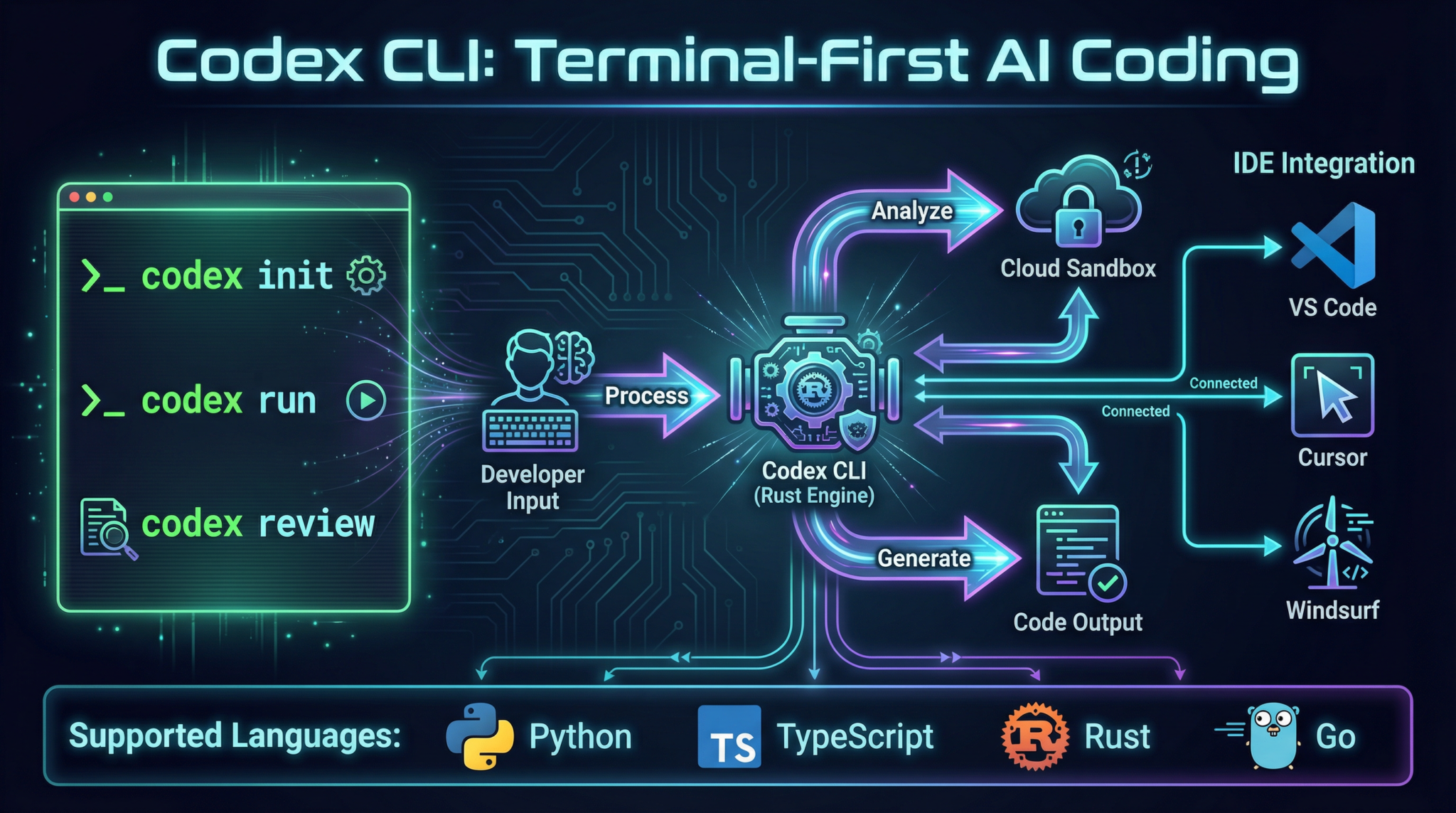
Diagram
<aside> 📚
ChatGPT Coding Masterclass - All Parts:
Part 1: The Complete Beginner's Guide
Part 2: Prompt Engineering for Developers
Part 3: What is Codex? The AI Coding Agent (You are here)
Part 5: 10 Real-World Coding Projects
Part 6: Multi-Agent Coding Pipelines
Part 7: Cheat Sheet + Resource Library
</aside>
Welcome to Part 3 of the ChatGPT Coding Masterclass — an exhaustive, nano banana pro-level deep dive into Codex, the AI coding agent powering the future of software development. In this module, we dissect Codex’s architecture, explore its ecosystem in 2026, and provide advanced hands-on guidance for professional developers to master Codex and its agentic capabilities.
At its core, Codex is an AI coding agent built upon the powerful GPT-5.3 architecture, specialized for code generation, reasoning, and multi-modal understanding. It’s not just a language model; it’s an agentic system that interprets, plans, generates, evaluates, and iterates code autonomously.