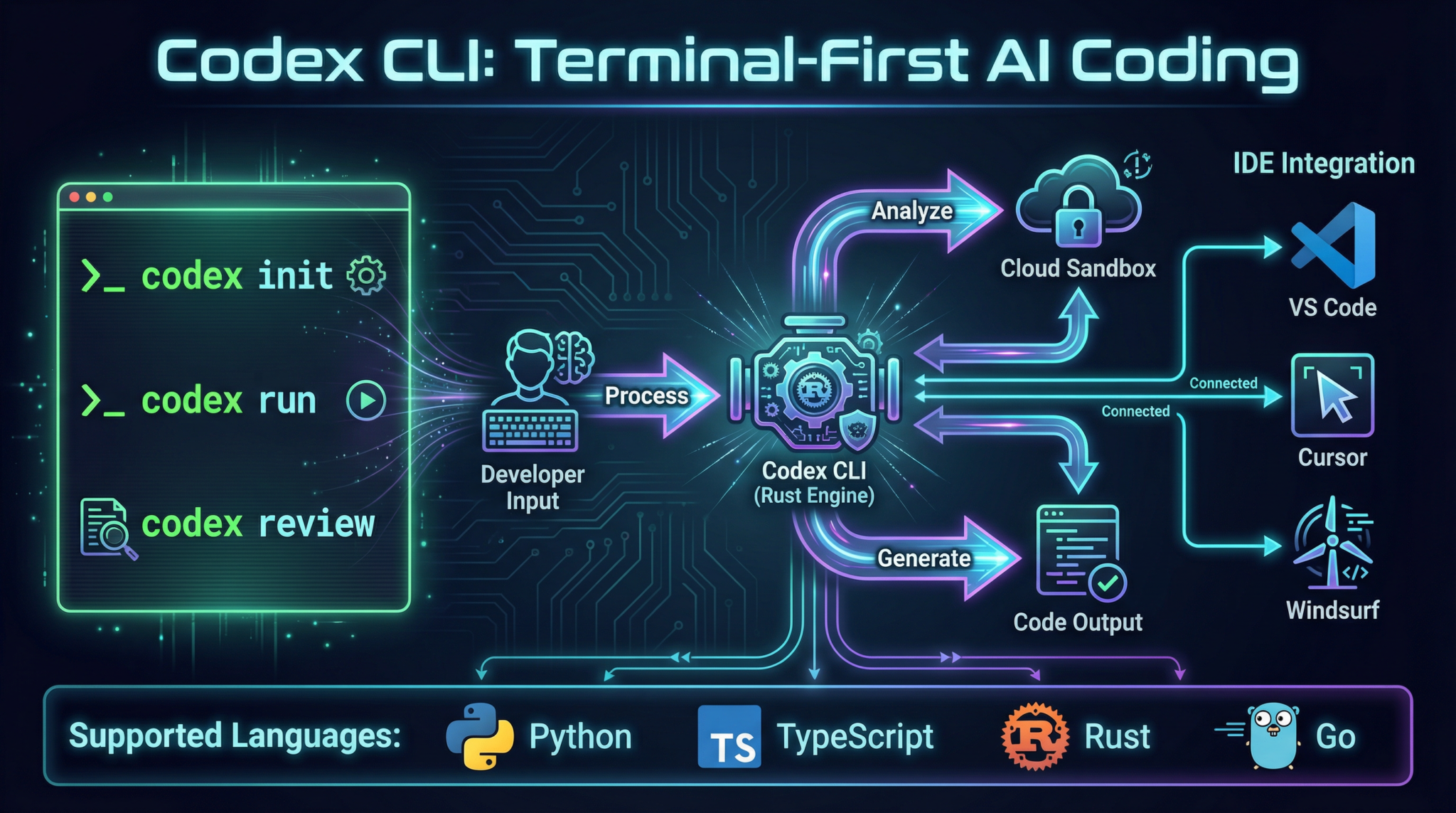
Diagram
<aside> 📚
ChatGPT Coding Masterclass - All Parts:
Part 1: The Complete Beginner's Guide
Part 2: Prompt Engineering for Developers
Part 3: What is Codex? The AI Coding Agent
Part 4: Codex CLI Deep Dive (You are here)
Part 5: 10 Real-World Coding Projects
Part 6: Multi-Agent Coding Pipelines
Part 7: Cheat Sheet + Resource Library
</aside>
Welcome to the Codex CLI Deep Dive, Part 4 of the ChatGPT Coding Masterclass series. This masterclass is crafted for professional developers and advanced practitioners eager to harness the full power of GPT-5.3-Codex via the Rust-based Codex CLI. In this module, we’ll explore terminal-first AI coding with exhaustive technical depth, from theoretical underpinnings to hands-on implementation, SDK usage, IDE integration, and advanced prompt engineering — culminating in a mastery of Codex CLI in the modern cloud-native AI ecosystem.
While most AI coding workflows have historically been IDE-centric, the shift to terminal-first AI coding with Codex CLI is no accident — it is a deliberate architectural and ergonomic choice driven by: